


Good Monday morning from your Hometown Lender. Big market analysis week ahead!
Friday was a largely uneventful day for rates, with bonds drifting lower through the afternoon, but not enough to merit lenders repricing worse. The question heading into the weekend was how much would the situation with Iran escalate.
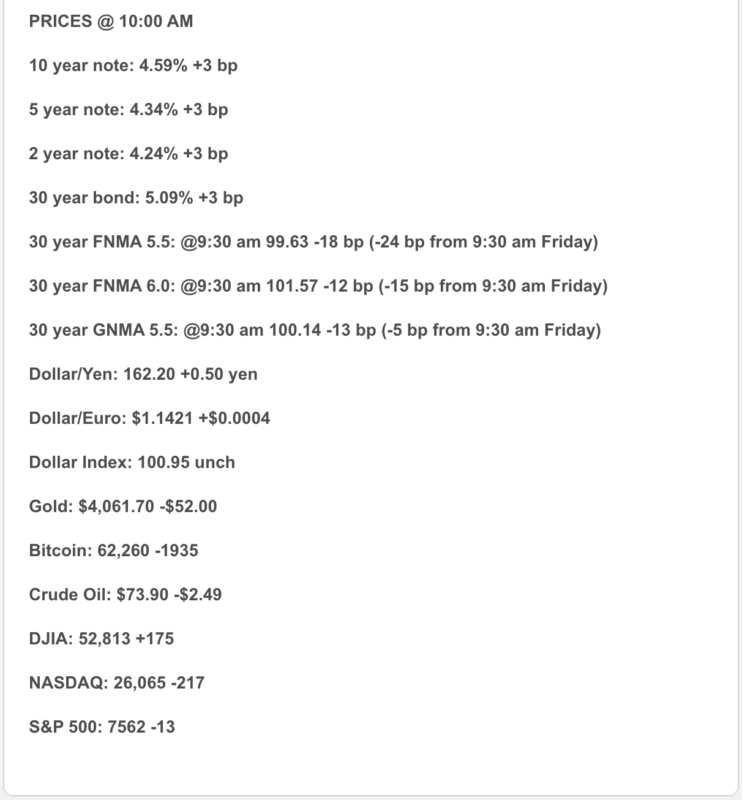
Rates this morning are a smidge worse, as bonds slip further this morning. Reprice risk on the day is low, bonds aren’t likely to sell off hard today but I wouldn’t look for any improvement either. The outlook for rates not great now, with renewed military strikes against Iran and Iran saying they are closing the Strait of Hormuz. President Trump said this morning that, “We’re going to guard it. We’re going to get paid for guarding it – a lot of money.” He went on to point out, “We’re going to be reimbursed, because the other nations are very wealthy. They’re on our side, and we can’t be expected to do that for nothing.”
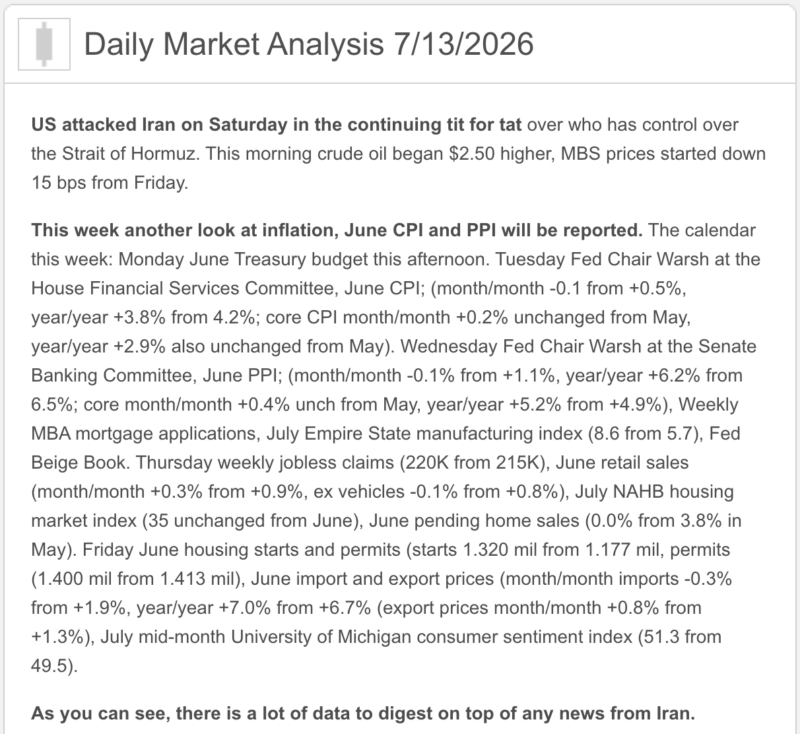
So rates will likely pause more than anything else today. Tomorrow CPI inflation data comes out, and that is likely to cause some moves. With the end of the ceasefire in Iran and oil prices being pushed higher once again though, we are not likely to get much help from the data no matter how it comes out. Lower inflation would only represent what happened a month ago during the ceasefire, and wouldn’t be cause for hope of continued improvement now that the fighting has recommenced and the traffic of oil through the Strait of Hormuz is threatened once again. If we saw surprisingly hot numbers that didn’t reflect a drop in inflation, that would be even worse as markets would take it as a sign that the Fed will need to hike rates sooner. The smart money is locking ahead of the data and floating down if the opportunity arises.
Market Analysis – From a higher and better view:
Market Analysis – Quick Snapshot
- Bonds: The 10-year Treasury is near 4.58% as renewed U.S.–Iran hostilities and concerns over the Strait of Hormuz pushed oil prices and bond yields higher. Markets are reminding us that geopolitics can move mortgage rates just as quickly as economic data. (The Wall Street Journal)
- Mortgage Rates: Daily tracking shows the 30-year fixed around 6.58% and the 15-year fixed around 5.95%. Rates remain elevated as inflation concerns and geopolitical uncertainty keep pressure on the bond market. (The Wall Street Journal)
- Fed Watch: This is a pivotal week. Fed Chair Kevin Warsh begins his first congressional testimony tomorrow, while CPI (Tuesday) and PPI (Wednesday) will provide the market’s next major inflation signals. Investors have increased expectations that the Fed may need to tighten policy again if inflation remains stubborn. (Reuters)
- Oil / Geopolitics: Brent crude climbed to around $79 per barrel after renewed missile and drone exchanges between the U.S. and Iran and conflicting reports surrounding shipping through the Strait of Hormuz. Higher energy prices can quickly translate into higher inflation expectations—and ultimately higher mortgage rates. (Reuters)
- Markets: Earnings season begins this week with major banks reporting alongside key inflation data. Between corporate earnings, inflation reports, Fed testimony, and Middle East headlines, expect a volatile week. (Reuters)
Market Analysis – What It Means
This week is packed with market-moving events. Inflation data, Fed testimony, and geopolitical developments all have the potential to move Treasury yields—and mortgage pricing—in either direction.
In plain English: This is a “watch the headlines” week. Volatility is likely, and mortgage pricing could change quickly.
Market Analysis – Housing & Mortgage Strategy
This remains a structure-the-payment market.
The best conversations right now are about:
Seller credits, temporary buydowns, permanent buydowns, builder incentives, ARM options where appropriate, and building a refinance strategy if rates improve in the future.
Today’s buyers are still buying—they simply want a payment that fits comfortably into their budget.
Lock vs. Float
- Lock bias: If closing within the next 30 days, locking remains the prudent strategy given this week’s concentration of market-moving events.
- Float bias: Floating should only be considered with additional time, flexibility, and a clearly defined exit strategy. CPI, PPI, and Fed testimony could all create significant volatility.
Today’s guidance: Lean toward locking short-term closings. This week’s event calendar leaves little room for complacency.
Stay safe and make today great!