


Good Friday am from your Hometown Lender. Here is Friday’s market analysis!
Yesterday saw mortgage bonds improve as oil prices fell and wholesale inflation came in cooler than expected. Once pricing came out, though, bonds were flat on the day with no change and no reason for lenders to reprice.
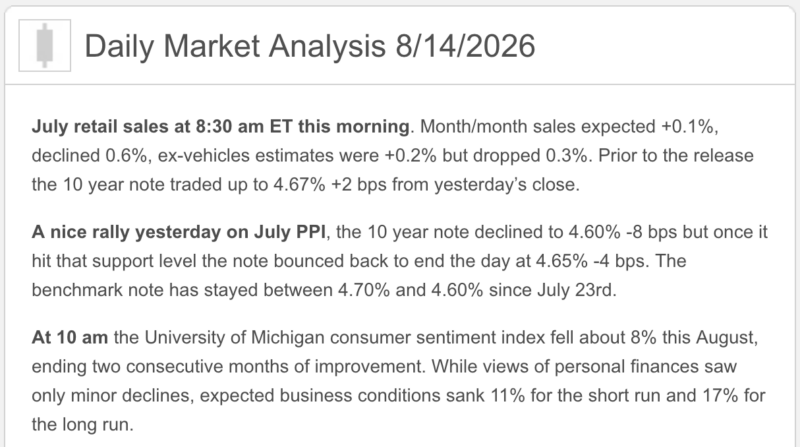
Rate sheets today should be similar to yesterday, and reprice risk on the day is low. It’s still summer on Wall Street, which means trading volume will probably drop through the day as traders take off for the weekend. Retail sales data already came in for this morning, and although retail sales fell in July by the most in more than a year, bonds didn’t really care.
Market Analysis – From a higher and better view:
Market Analysis – Quick Snapshot
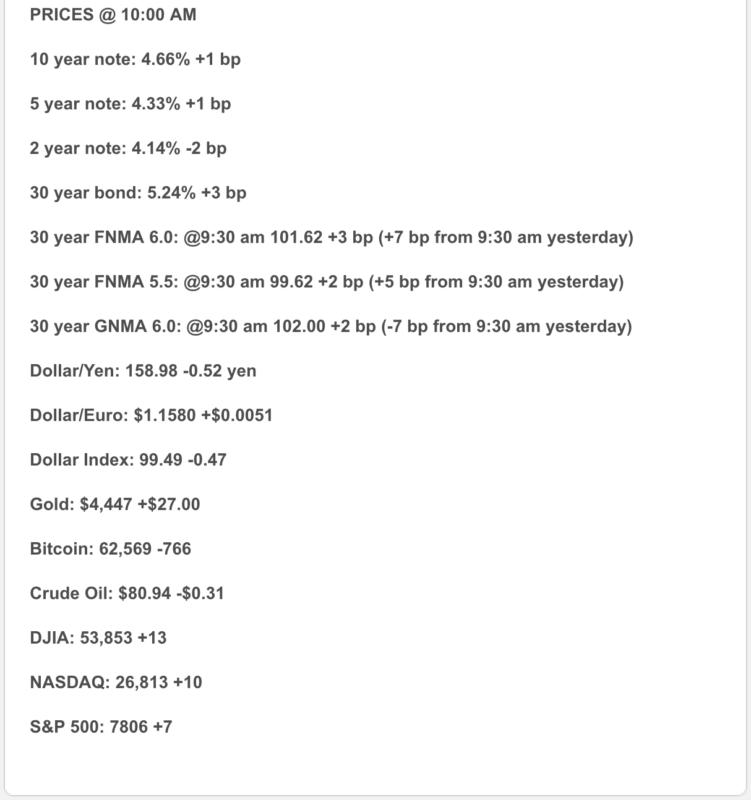
10-Year Treasury: The 10-year yield has eased to roughly 4.63% after this morning’s weaker-than-expected retail-sales report. That is mortgage-friendly, although the long end of the Treasury market remains stressed—the latest 30-year auction cleared at its highest yield in 25 years. Bonds liked this morning’s data; unfortunately, they still have commitment issues.
Mortgage Rates: Today’s national averages are approximately 6.71% for a 30-year fixed and 6.06% for a 15-year fixed. Freddie Mac’s weekly survey dipped to 6.67% and 5.96%, respectively—the first decline in the 30-year average in six weeks.
Retail Sales — BIG Miss: July retail sales fell 0.6%, versus expectations for a 0.1% increase, marking the first decline in nine months and the largest drop in 14 months. Even more important for GDP, core retail sales fell 0.4% versus expectations for a 0.3% gain. The American consumer is not disappearing—but is clearly becoming more selective.
Inflation: This week produced two encouraging reports. July CPI rose only 0.1%, with annual inflation easing to 3.4% and core CPI to 2.5%. Yesterday, PPI was unchanged for the month, versus expectations for a 0.2% increase, although producer prices remain 4.7% higher year over year.
Fed Watch: The combination of July job losses + cooler CPI + flat PPI + weak retail sales has materially strengthened the argument for the Fed to hold rates at 3.50%–3.75% in September. The Fed still has August employment and inflation data before deciding, so the debate is not over.
Consumer Confidence: University of Michigan sentiment fell sharply to 51.0 from 55.2, below expectations of 54.5. One-year inflation expectations ticked up to 4.3%, showing that consumers remain uncomfortable with the cost of living even as official inflation data improves.
Oil & Geopolitics: Brent crude is around $87, with WTI near $81. Oil remains on track for a weekly gain after the U.S. said it could maintain its naval blockade of Iran indefinitely, while traffic through the Strait of Hormuz remains severely constrained.
Markets: Stocks are roughly flat after yesterday’s record S&P 500 close, as investors weigh weaker consumer data against improving Fed expectations and continued Middle East risk.
Politics & Trade: The administration is preparing additional economic pressure on Iran and has also announced new tariffs on imported drones and components, ranging from 10% to 100% depending on origin and product. Tariffs, energy prices and political pressure surrounding the Fed remain important inflation wildcards.
Why It’s Happening
The economic story shifted noticeably this week:
Weaker jobs + softer CPI + flat PPI + weaker spending = less pressure on the Fed to hike.
But:
Oil + tariffs + large federal borrowing needs = long-term yields are still reluctant to fall dramatically.
Market analysis in plain English: The economic data is finally giving mortgage rates some help. The bond market would simply like several more weeks of evidence before sending champagne.
Market Analysis – What It Means for Housing
This is becoming a potentially important setup for housing.
Mortgage rates remain near 6.7%, but buyers are extremely rate-sensitive. Freddie Mac specifically noted that recent increases in both purchase and refinance applications show borrowers responding even to modest rate improvements.
That means sellers and agents should not underestimate what even a ¼% rate improvement combined with seller credits or a buydown can do for affordability.
This remains a structure-the-payment market:
Seller credits • Temporary/permanent buydowns • Builder incentives • Strategic ARM options • Debt consolidation • Future refinance planning
Lock vs. Float
Closing within 15 days: Lock bias. Today’s improvement is worth protecting.
15–30 days: Balanced. The recent economic trend is becoming more bond-friendly, but geopolitical and energy risk remain significant.
30+ days: Cautious float bias is becoming more defensible if employment and inflation continue cooling.
Today’s market analysis guidance:
Use improvement—don’t chase it. A better rate today is real; an even better rate next week is still a forecast.
Stay safe and make today great!