


Good Thursday morning from your Hometown Lender. Here is your market analysis for Thursday!
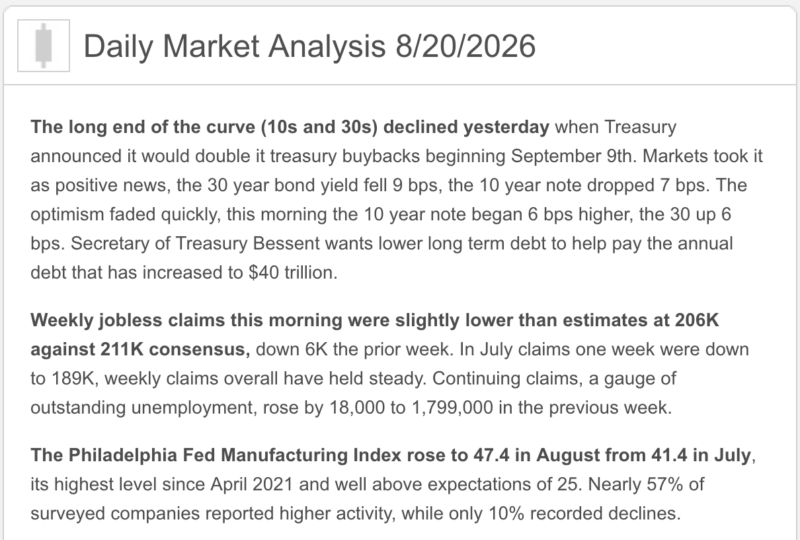
Yesterday, bonds got a surprise boost from Treasury Secretary Scott Bessent when it was announced that the Treasury would at least double its liquidity fund for buying “off-the-run” long-term bonds. Yesterday’s unexpected gift of improvement is appreciated, but as mentioned, it is not a trend reversal, and rate sheets are only going to benefit from this for a little while.
That “little while” ended this morning, as rates have given back yesterday’s gains. Markets sobered up, and bonds are again in trouble. Oil prices continue creeping higher as Iran’s game plan continues to be to stall into the mid-term elections and see what happens next. I don’t know that there is a lot of logic there, as President Trump will have plenty of time to put more pressure on Iran even if the house is flipped. It is awful to watch a military state continue to forsake its people. Higher oil prices will continue to weigh on mortgage rates.
Best to lock on an up day and float down if we see more improvements.
Market Analysis – From a higher and better view:
Market Analysis – Quick Snapshot
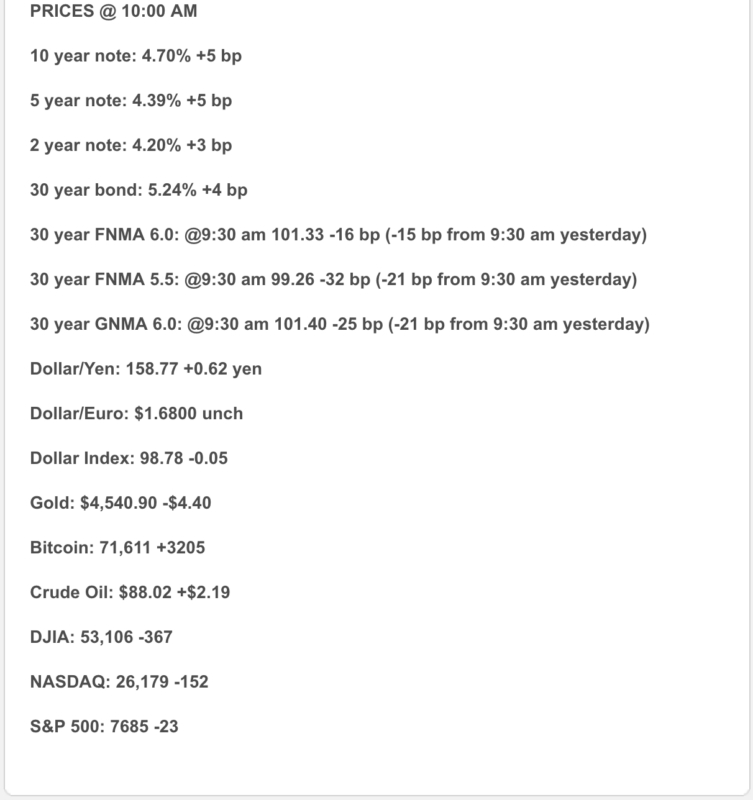
10-year Treasury: Approximately 4.70%, moving higher again.
Mortgage rates: National 30-year averages remain around 6.7%; Mortgage News Daily finished Wednesday at 6.72%.
Mortgage bonds: Significantly weaker this morning, increasing the risk of negative lender repricing.
Oil: Near $94 per barrel.
Federal Reserve: Still at 3.50%–3.75%, but yesterday’s minutes were decidedly more hawkish.
Market Analysis – Why It’s Happening
Yesterday’s Treasury buyback announcement briefly lowered yields, but that relief is fading. Investors recognize that doubling selected bond buybacks to $4 billion improves liquidity without solving the larger issues of federal debt, heavy borrowing and persistent inflation.
Fed Watch
The July Fed minutes revealed that:
- Several policymakers favored a quarter-point increase in July.
- Many believe additional tightening may be necessary if inflation does not move toward 2%.
There was no meaningful support for a rate cut.
Markets still expect the Fed to hold in September, but a year-end increase remains possible.
Translation: the Fed is not necessarily raising rates next month—but it is certainly not preparing the confetti for a rate-cut celebration.
Market Analysis – Economic & Political Backdrop
Initial unemployment claims fell to 206,000, below the 210,000 forecast. Layoffs remain low, although continuing claims increased to 1.799 million, suggesting hiring is less robust.
The Philadelphia Fed Manufacturing Index jumped to 47.4, well above the 25 forecast. Stronger labor and manufacturing data reduce the urgency for the Fed to cut rates.
Politically, President Trump threatened economic consequences for countries supporting Iran, while disruptions in the Strait of Hormuz pushed oil toward $94. Higher energy costs remain the market’s clearest inflation risk.
Meanwhile, the U.S. and Canada are negotiating potential reductions in auto, steel and aluminum tariffs before Saturday’s deadline—one possible piece of inflation relief if finalized.
What It Means
Today’s combination is unfavorable for near-term mortgage pricing:
- Resilient economic data
- Hawkish Fed minutes
- Higher oil prices
- Renewed Treasury selling
- Weaker mortgage-backed securities
Rates are not dramatically higher yet, but the morning trend favors caution. Yesterday’s improvement was welcome; today’s reversal reminds us that relief and resolution are not the same thing.
Market Analysis – Housing & Mortgage Strategy
This remains a structure-the-payment market. Buyers should focus on seller credits, permanent or temporary buydowns, adjustable-rate options where appropriate and negotiating the transaction—not simply waiting for rates to fall.
Sellers should understand that affordability remains the buyer’s biggest obstacle. A strategically deployed credit may accomplish more than another price reduction.
Lock vs. Float
Closing within 15 days: Lock.
Closing in 15–30 days: Lean toward locking, particularly before afternoon repricing.
Closing beyond 30 days: A cautious float may still make sense with a defined target and exit strategy.
Floating without a plan is not strategy!
Stay safe and make today great!