


Good Monday morning from your Hometown Lender. Here is your Monday morning market analysis!
Last week‘s tame data only did so much to move rates. In fact, it helped mortgage rates more than treasuries and the spread between the 10yr note and mortgage bonds narrowed closer to normal levels. Oil is still the lever and as markets are now believing that Iran will not make a lasting deal on the Strait of Hormuz, oil prices will be challenged to drop. Even though some oil is being escorted through the Strait by the US Navy, the number of ships transiting is a small percentage of what it was prewar. Oil needs to trade back in to the $60’s/barrel for mortgage rates to make a meaningful push lower and right now we are at $82/barrel. There is minimal economic data this week which puts even more focus on the Middle East.
Market Analysis – From a higher and better view:
Market Analysis – Quick Snapshot
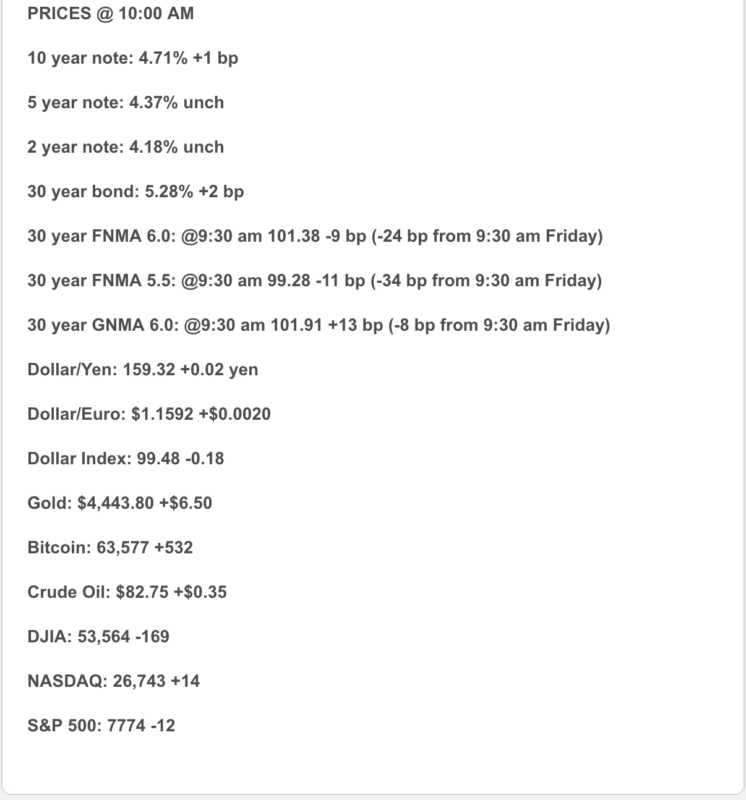
- 10-Year Treasury: The 10-year is near 4.70%, while the 30-year Treasury has climbed to approximately 5.29%—its highest level since 2007. Softer economic data is helping the front end of the bond market, but concerns about federal borrowing and long-term inflation are keeping longer-term yields stubbornly high. The economy is cooling, yet the bond market apparently forgot to turn down the thermostat.
- Mortgage Rates: Today’s national average is approximately 6.69% for a 30-year fixed and 6.07% for a 15-year fixed. That is an improvement from late July, when daily 30-year averages pushed above 6.80%.
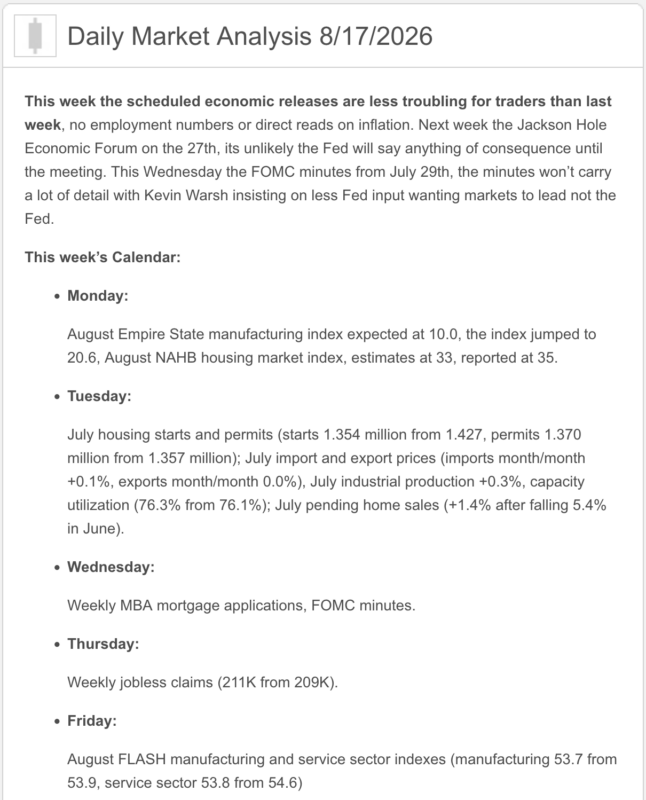
- Consumer — Cooling: July retail sales unexpectedly fell 0.6%, the first decline in nine months and the largest in 14 months. Core retail sales also declined 0.4%. Consumer sentiment dropped to 51.0 in August from 55.2 in July, reinforcing signs that higher living costs are beginning to bite.
- Inflation: Recent data has been more encouraging. July CPI eased to 3.4% annually, while July producer prices were unchanged for the month and slowed to 4.7% annually from 5.5%. Inflation is still too high, but the direction has improved.
- Fed Watch: Markets now assign only about a 31% probability of a September rate hike, down from roughly 55% last week. A Reuters survey released today found most economists expect the Fed to keep its 3.50%–3.75% rate unchanged through year-end. Weak jobs, softer retail spending and cooling inflation are giving the Fed room to wait.
- Housing — Fresh Today: Builder confidence edged up to 35 from 34, slightly better than expected but still historically weak. Nearly two-thirds of builders are using incentives, roughly 30% are cutting prices, and the average price reduction is about 6%. For resale agents, that is important: your seller may be competing against a builder offering both a discount and financing incentives.
- Oil & Geopolitics: Brent crude is near $88.58, while WTI is approximately $82.22 as U.S.–Iran negotiations remain stalled and shipping through the Strait of Hormuz stays constrained. Energy remains the biggest wildcard for the inflation outlook.
- Markets & Politics: Stocks are mixed this morning as weaker consumer data reduces Fed-hike expectations, while rising long-term Treasury yields create another headwind. Markets also continue monitoring questions surrounding U.S. fiscal policy and Federal Reserve independence—both of which can increase the inflation-risk premium investors demand on long-term bonds.
Why It’s Happening
The market is balancing two competing stories:
Weaker jobs + softer consumer spending + cooler inflation = Fed can stay patient.
But:
High oil + government borrowing + geopolitical risk = long-term yields remain elevated.
In plain English: The economic data is becoming more mortgage-friendly. The bond market just isn’t fully convinced yet.
Market Analysis – What to Watch This Week
Tuesday: Industrial Production
Wednesday: Minutes from the Fed’s July 28–29 meeting
This week: Earnings from major retailers including Home Depot, Target and Walmart
Wednesday’s Fed minutes will be particularly important because the July decision produced three dissents favoring a rate hike. Markets want to know just how divided the Fed really is.
Housing & Mortgage Strategy
This remains a structure-the-payment market.
Seller credits • Temporary/permanent buydowns • Builder incentives • Strategic ARM options • Debt consolidation • Future refinance planning
Today’s builder report reinforces the message: buyers are extremely payment-sensitive, and sellers who help solve the payment have an advantage.
Lock vs. Float
Closing within 15 days: Lock bias. Current improvement is worth protecting.
15–30 days: Balanced. Cautious floating may make sense with a clearly defined ceiling.
30+ days: A managed float is increasingly defensible if employment and inflation continue cooling.
Today’s guidance:
The economic trend is becoming more rate-friendly, but the 10-year near 4.70% reminds us not to get ahead of ourselves. Take improvements when they accomplish the borrower’s goal.
Stay safe and make today great!