


Good morning on this best day of the week Wednesday from your Hometown Lender. Here is your hump day market analysis!
Yesterday bonds improved early and held steady till. Although there wasn’t any one event to credit for the gains, it was largely a continuation of optimism from markets that there would be progress in the Middle East and oil prices could continue to fall.
Rate sheets this morning likely to be similar to yesterday or maybe slightly better, despite bonds losing ground this morning on hotter than expected PCE inflation data. Mortgage bonds have lost about -20bps on the day, which is half of yesterday’s gains. That also means rate sheets may not be as good today as some of yesterday’s late day reprices better. There is no other economic data to worry about today, and the coast is pretty clear till Fed Chair Kevin Warsh speaks in Jackson Hole on Friday.
Market Analysis – From a higher and better view:
Market Analysis – Quick Snapshot
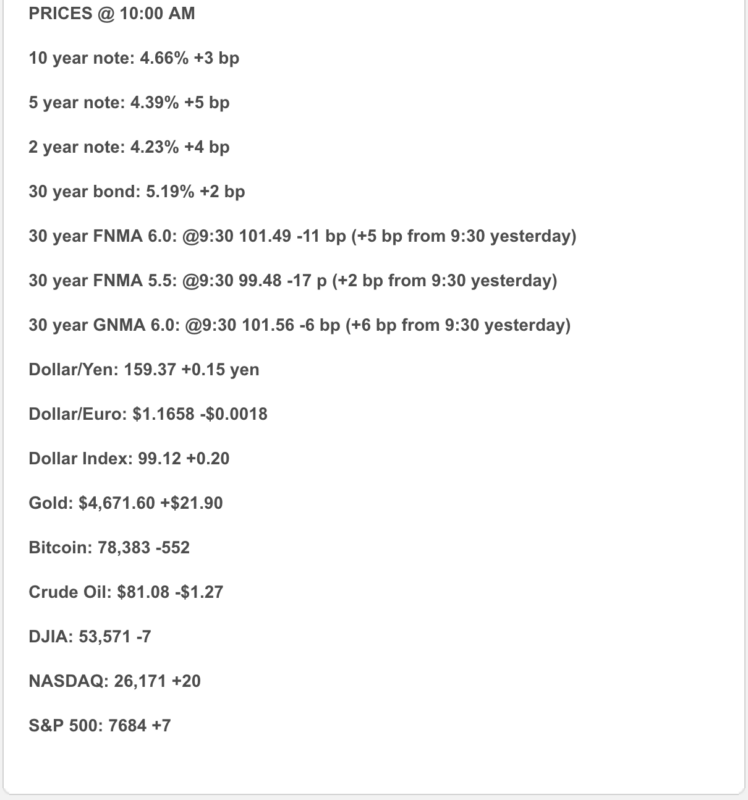
- 10-year Treasury: approximately 4.65%, slightly higher after inflation data
- 30-year fixed: approximately 6.70%
- 15-year fixed: approximately 6.07%
- Stocks: Nearly flat as markets digest inflation and await Nvidia earnings
- Oil: Lower, with Brent near $87
- Fed outlook: September rate-hike probability increased to approximately 42%
Rates vary by borrower, property, loan structure and points. Mortgage-rate data
Inflation: Better Than a Resurgence, Worse Than Progress
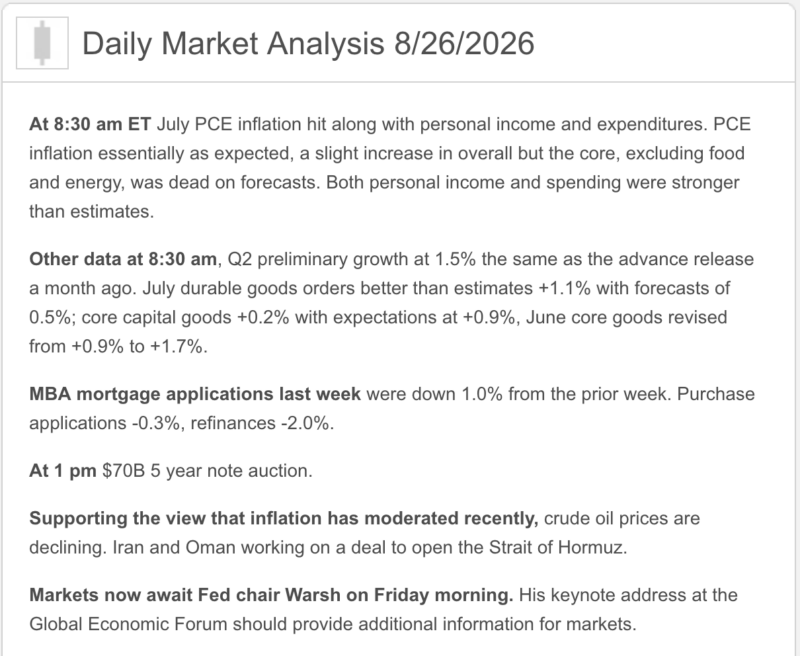
The Fed’s preferred inflation gauge delivered another sticky reading:
- Headline PCE: up 0.2% monthly and 3.7% annually
- Core PCE: up 0.2% monthly and 3.3% annually
- Headline inflation exceeded the 3.6% forecast
Inflation did not accelerate—but it did not meaningfully improve either. At 3.7%, it remains well above the Fed’s 2% target and keeps a possible rate increase on the table. Inflation is apparently enjoying its extended stay and has not requested checkout. PCE report coverage
Market Analysis – Economic Growth
Second-quarter GDP remained unrevised at an annualized 1.5%, down from 2.1% in the first quarter. However, consumer spending was revised substantially higher to 3.4%.
The economy is therefore slowing, but consumers have not fully retreated. That combination—moderate growth with persistent inflation—makes the Fed’s decision more complicated. BEA GDP data
Political & Global Backdrop
Trade tensions escalated after Canada announced retaliatory tariffs on approximately $20 billion of U.S. goods, responding to new American tariffs on Canadian vehicles, steel and other products. These duties could increase business costs and add another layer of inflation pressure. Reuters tariff coverage
Meanwhile, expanded U.S. sanctions against Iran are keeping energy markets—and the Strait of Hormuz—at the center of the economic conversation. Oil is lower today, which helps, but geopolitical risk remains capable of reversing that relief quickly.
Market Analysis – What It Means
Today’s data are slightly unfriendly for bonds and mortgage rates. Inflation remains too high for the Fed to declare victory, while stronger consumer spending weakens the argument for immediate rate relief.
For housing, affordability remains the primary obstacle—but slower transaction volume may create leverage for buyers through seller concessions, temporary buydowns and more flexible negotiations.
Lock vs. Float
- Closing within 15 days: Lock.
- Closing within 15–30 days: Maintain a clear locking bias.
- More than 30 days out: Floating may be reasonable only with the ability to tolerate volatility.
Today’s report did not create a rate emergency, but it removed some of the optimism generated by yesterday’s bond rally. When inflation refuses to cooperate, protecting a workable payment is generally better than gambling for perfection.
Stay safe and make today great!