


Good Thursday morning from your Hometown Lender. Let’s get to today’s big market analysis!
Yesterday bonds improved in the afternoon after it was announced that Iran and Oman were close to a deal to reopen the Strait of Hormuz. Rates today are likely to be a bit worse than yesterday, after bonds took a bit of a dive overnight and opened quite a bit weaker.
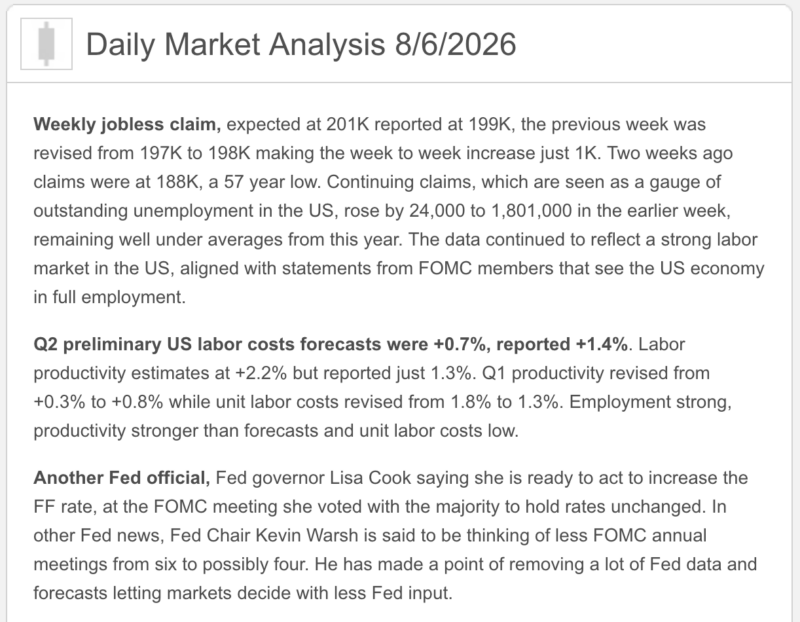
This morning’s jobless claims number came in under 200k again (at 199k, but that’s still below 200k!) and continuing claims (the folks who are still on the unemployment rolls) is significantly lower than a year ago. That said, I think this is just some consolidation before tomorrow’s BLS jobs report. That is the biggest report of the month and will create volatility.
I do not recommend floating loans into that report. It is better to lock now and float down later on.
Market Analysis – From a higher and better view:
Quick Snapshot
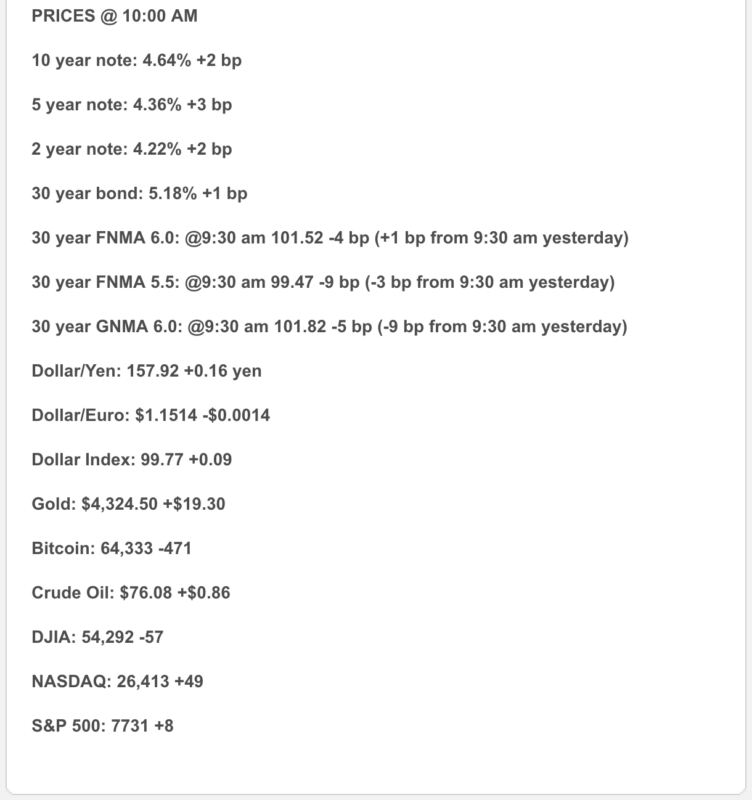
- 10-Year Treasury: The 10-year yield is near 4.64%, slightly higher as oil prices rebound and investors prepare for tomorrow’s employment report. Bonds are not panicking—they are simply refusing to relax without written permission.
- Mortgage Rates: Daily national averages are approximately 6.79% for a 30-year fixed and 6.14% for a 15-year fixed. Freddie Mac’s latest available weekly average is 6.66% for the 30-year fixed; a new weekly reading is due later this morning.
- Labor Market: Initial jobless claims increased only slightly to 199,000, below expectations, while continuing claims rose to 1.801 million. Planned layoffs fell 27% in July to their lowest level in two years. The labor market is cooling—but employers are still more inclined to slow hiring than start firing.
- Productivity & Inflation: Second-quarter productivity grew at a stronger-than-expected 1.4% annualized rate, while unit labor costs increased only 1.3%. Better productivity allows businesses to produce more without creating as much wage-related inflation pressure—a welcome combination for the Fed and bond market.
- Fed Watch: Fed officials remain divided. San Francisco Fed President Mary Daly supports last week’s decision to hold rates at 3.50%–3.75%, while Governor Lisa Cook says she is prepared to support another increase if inflation does not improve. Translation: the Fed paused—but nobody put away the hiking boots.
- Oil & Geopolitics: Brent crude is near $80.28, while WTI is around $75.83 as markets await progress in negotiations involving Iran, Oman and shipping through the Strait of Hormuz. Oil remains below July’s highs, but the geopolitical risk premium has not disappeared.
- Housing: MBA’s average 30-year contract rate increased to 6.81%, its highest level in roughly a year, and total mortgage applications declined 2.9%. Purchase demand remains extremely payment-sensitive.
- Politics & Trade: The administration is reportedly preparing a 15% tariff and minimum import prices on certain polysilicon-related products, aimed at supporting domestic solar and semiconductor production. The policy may help U.S. manufacturers, but it also introduces another potential source of equipment and construction-cost inflation.
Market Analysis – Why It’s Happening
Markets are balancing:
Stable employment + improving productivity + persistent inflation + higher oil prices + potential new tariffs.
Market analysis in plain English: Today’s labor data is bond-friendly, but inflation and politics are keeping the celebration appropriately restrained.
What It Means
The productivity report is encouraging because stronger output and contained labor costs can help inflation cool without requiring a recession.
However, tomorrow’s official employment report remains the major event. Economists expect approximately 80,000 new jobs with unemployment holding near 4.2%. A weaker report could help mortgage pricing; stronger hiring or hotter wages could quickly push yields higher.
Market Analysis – Housing & Mortgage Strategy
This remains a structure-the-payment market.
The most productive conversations involve:
Seller credits • Temporary and permanent buydowns • Builder incentives • Strategic ARM options • Debt consolidation • Future refinance planning
Buyers have not disappeared. They are calculating every dollar—and financing strategy can determine whether the transaction works.
Lock vs. Float
Closing within 30 days: Moderate lock bias. Today’s data is encouraging, but tomorrow’s jobs report creates substantial event risk.
Closing beyond 30 days: A carefully managed float may be reasonable with a defined ceiling and the ability to lock quickly.
Today’s guidance:
Protect acceptable short-term pricing. Tomorrow’s jobs report could reward patience
Stay safe and make today great!