


And a good Friday morning to you from your Hometown Lender. Let’s get into the end of week market analysis!
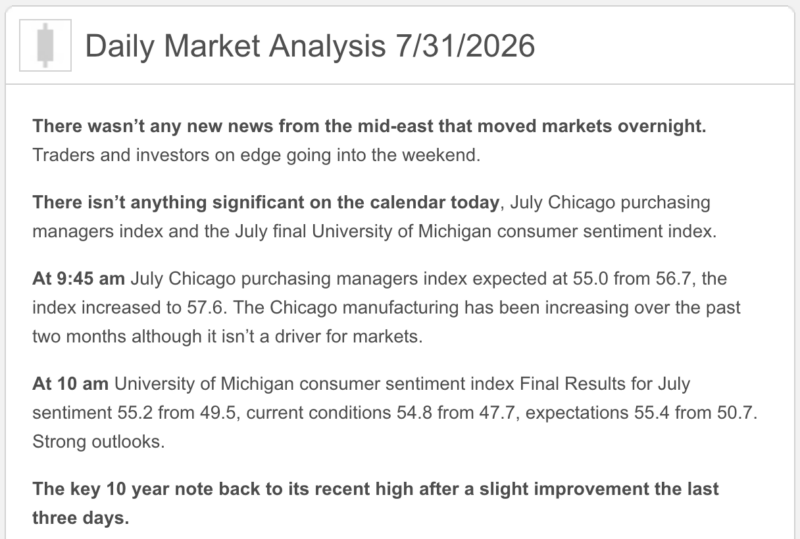
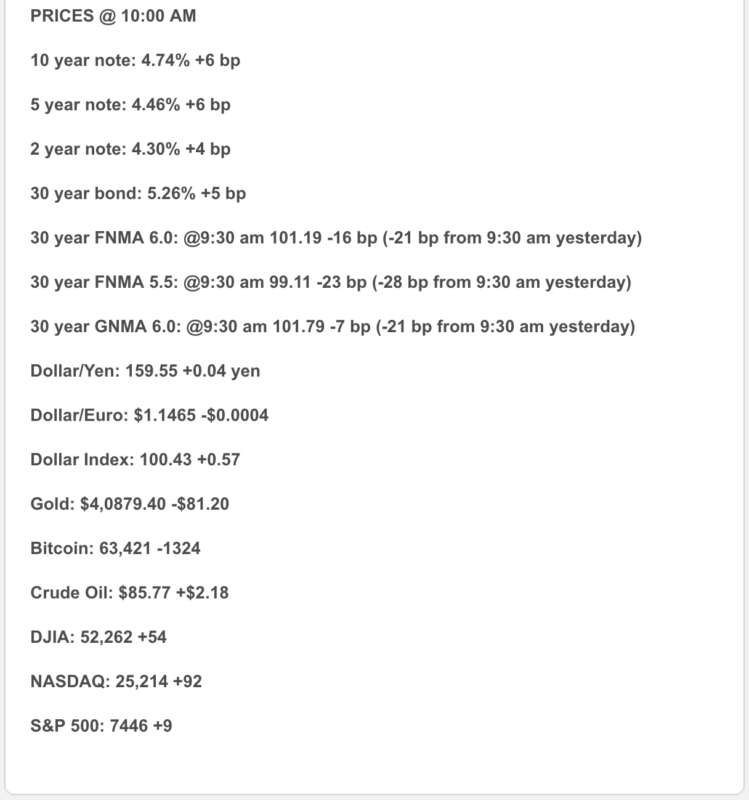
Yesterday saw mortgage bonds slip a bit by the end of the day on concerns the Fed was not as focused on inflation as it should be. Rates today are getting slammed, with bonds taking a bath early. The 10yr has jumped to 4.74%. Reprice risk is moderate; this is still a summer Friday, and traders will be leaving the office early, so low trading volumes could make a mess of things.
Market Analysis – From a higher and better view:
Market Analysis – Quick Snapshot
- 10-Year Treasury: The 10-year yield surged toward 4.74%, its highest intraday level since January 2025. The bond selloff accelerated after three Fed officials explained why they favored raising rates this week. Apparently, bonds did not receive the “casual Friday” memo.
- Mortgage Rates: Freddie Mac’s latest weekly averages rose to 6.66% for a 30-year fixed and 6.04% for a 15-year fixed. Faster-moving daily tracking was recently near 6.78%, showing that real-time lender pricing remains under additional pressure.
- Fed Watch: The Fed held its benchmark rate at 3.50%–3.75%, but three policymakers voted for a quarter-point increase. Those dissenters are now publicly arguing that current policy may not be restrictive enough, with one suggesting that a series of small increases could be necessary.
- Labor Costs: Second-quarter employment costs rose 0.9%, slightly above expectations, and increased 3.4% over the past year. Wage growth remains firm, but today’s report did not suggest a new wage-inflation spiral.
- Consumer Sentiment: July consumer sentiment improved to 55.2, up from 49.5 in June. One-year inflation expectations declined to 4.2%, while longer-term expectations remained at 3.3%—better, but still nowhere near “mission accomplished.”
- Oil & Geopolitics: Brent crude is trading near $89 per barrel as the continuing U.S.–Iran conflict threatens shipping routes and keeps an inflation premium embedded in energy prices. Higher oil remains a meaningful risk for consumer inflation and mortgage rates.
- Politics & Trade: Political pressure for easier monetary policy is colliding with growing internal Fed pressure to tighten. Meanwhile, recently imposed U.S. tariffs of 10%–12.5% on imports from 60 trading partners remain another potential source of higher prices and slower growth.
Why It’s Happening
Markets are balancing an uncomfortable combination:
Better consumer sentiment + firm wages + persistent inflation + elevated oil prices + doubts about the Fed’s next move.
In plain English: The economy is not falling apart, but inflation is not behaving well enough for bonds to relax.
Market Analysis – What It Means
The Fed did not raise rates this week, but that has not helped long-term borrowing costs. Investors are demanding higher yields because they remain concerned that inflation could stay elevated without additional Fed action.
Mortgage rates follow the bond market more closely than the Fed’s overnight rate, which explains why mortgage pricing can worsen even when the Fed holds steady.
Market Analysis – Housing & Mortgage Strategy
This remains a structure-the-payment market.
The most productive conversations involve seller credits, temporary or permanent buydowns, builder incentives, carefully selected ARM options, debt consolidation and future refinance planning.
Buyers have not disappeared. They are simply calculating every dollar—and the right financing structure can determine whether the calculation works.
Lock vs. Float
- Closing within 30 days: Strong lock bias. Today’s Treasury selloff and increasingly hawkish Fed commentary create real near-term risk.
- Closing beyond 30 days: A cautious float may be considered only with a defined ceiling and the ability to lock quickly.
Today’s guidance:
Protect acceptable pricing.
Stay safe, have a great weekend, but first… make today great!