


Good Thursday morning from your Hometown Lender! Let’s dig into today’s big market analysis news…
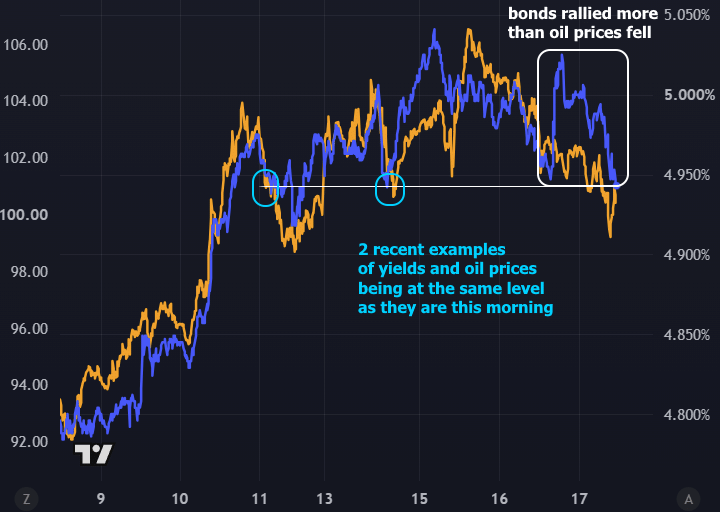
Heading into yesterday’s rate hike, recent evidence suggested the longer end of the bond market would appreciate a hike. There was no telling exactly how this would impact rates on Fed day itself–only that it was probably the lesser of two evils in the coming weeks. It was highly reassuring to see essentially no reaction to the rate hike in the first 30 minutes. But the press conference introduced additional selling pressure (obviously). Now this morning, bonds have gone a long way toward fulfilling the paradoxical prophecy. Even though a good amount of credit must be given to lower oil prices, there is still excess positive momentum in bonds that can’t be explained by oil.
The following chart shows bond yields dropping much faster than oil prices this morning in order to return to a more correlated trend. This is a demonstration of excess strength in bonds because they’ve generally been doing a bit worse than a 1:1 oil price correlation would suggest. Most simply, there are several times in the past week where both yields and oil prices were at the same levels they are this morning. In other words, there’s no longer any lasting evidence of yesterday’s Fed press conference sell-off.
Market Analysis – from a higher rand better view:
The Fed raised rates yesterday—but longer-term bonds are improving today. Apparently, the bond market appreciated the medicine after reading the warning label.
Quick Snapshot
- Latest completed 30-year benchmark: 7.24%, up 0.02%
- Latest completed 15-year benchmark: 6.84%, up 0.02%
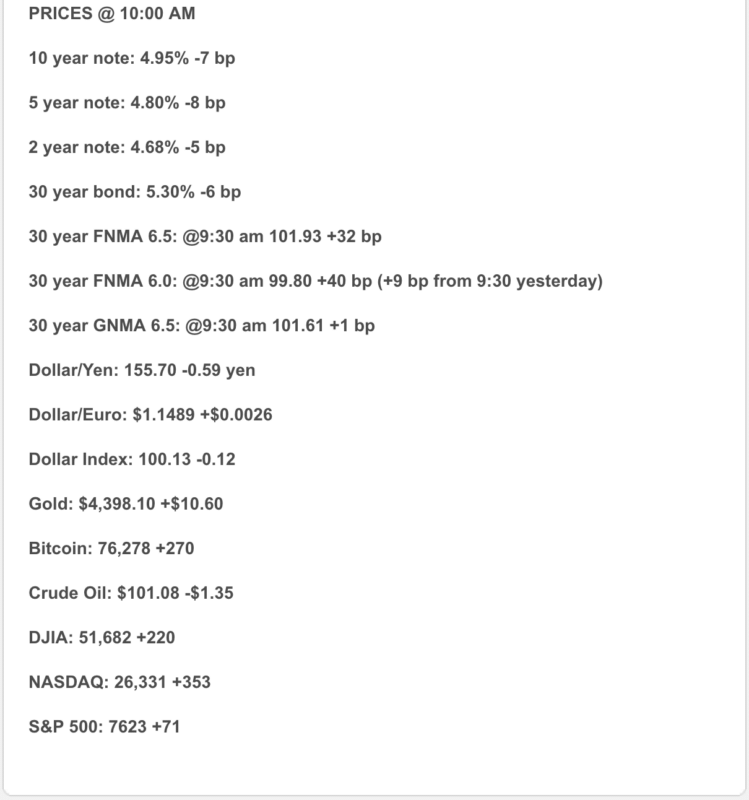
- 10-year Treasury: Approximately 4.94%, down nearly 8 basis points
- Mortgage bonds: Up nearly ½ point intraday
- Brent crude: Near $101, down approximately 3.5%
- Stocks: Major indexes trading higher
The mortgage benchmarks are Wednesday’s completed national averages—not individual loan quotes. Treasury and MBS figures reflect today’s live trading and suggest improving rate-sheet potential. Mortgage News Daily
Market Analysis –What Happened at the Fed?
The Fed unanimously raised its benchmark rate by 0.25% to 3.75%–4.00%, its first increase since 2023. Sixteen of 18 policymakers expect at least one additional hike this year.
However, longer-term Treasury yields declined. Investors appear to believe a more credible inflation fight could reduce long-term inflation risk—even while short-term borrowing costs rise. Reuters market analysis
Market Analysis –What Hit This Morning?
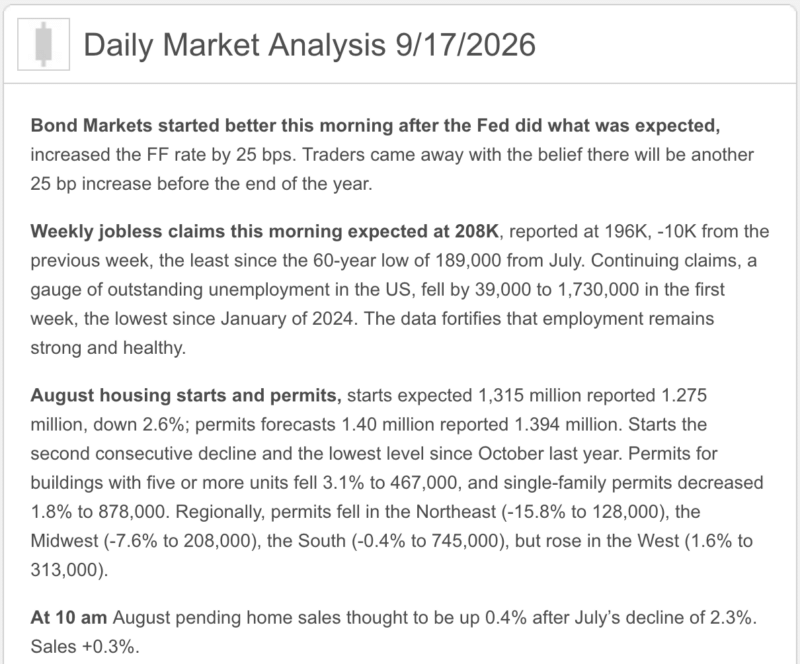
The labor market remains strong. Initial jobless claims unexpectedly fell to 196,000, versus approximately 208,000 expected. Fewer layoffs give the Fed additional room to prioritize inflation. U.S. Department of Labor
Housing remains divided. Single-family housing starts rose 7.6% in August, but total starts declined 2.6% as multifamily construction fell sharply. Building permits—a clue about future construction—also declined. Reuters housing report
Oil is providing relief. Brent crude declined toward $101 as Saudi Arabia redirected additional supply through Oman. Geopolitical risk remains elevated, but falling oil prices reduce some immediate inflation pressure. Reuters global-markets report
Political Backdrop
President Trump again called for lower interest rates but stopped short of directly criticizing Chairman Warsh. With another potential hike immediately before the midterm elections, inflation and affordability will remain highly political—even if the Fed insists it is merely minding its own monetary business.
Market Analysis –What It Means
Yesterday’s Fed hike did not automatically increase mortgage rates. Mortgage pricing follows longer-term Treasury yields, inflation expectations and mortgage-backed securities more closely than the Fed’s overnight rate.
Today’s bond rally is encouraging, but lenders may pass through improvements cautiously after this week’s volatility.
Lock vs. Float
- Closing within 15 days: Lock or carefully capture today’s improvement.
- Closing within 15–30 days: Maintain a locking bias; consider floating only with active monitoring.
- More than 30 days: Some room to float, but establish specific Treasury and pricing triggers.
Bottom line: The Fed raised short-term rates, but the bond market is giving mortgage pricing some breathing room. Encouraging? Yes. Victory lap? Let’s keep the champagne refrigerated.
Stay safe and make today great!